
Workers rush into tasks without a proper safety briefing. Supervisors scramble for relevant content minutes before a meeting. Topics repeat so often that attendance turns into autopilot. This is the reality on too many job sites—and it’s why most toolbox talks fail to make an impact.
The truth is, effective toolbox talks aren’t about checking a box. They’re about creating moments of real connection, awareness, and behavioral change. The right topic, delivered with clarity and relevance, can prevent an injury, spark a safety conversation, or even save a life.
Here’s how to choose and deliver toolbox talk topics that actually matter.
Why Most Toolbox Talks Fall Short
Too many safety meetings suffer from the same flaws: outdated content, zero audience engagement, and a lack of follow-up. A talk about “general PPE” for the fifth time in two months doesn’t cut it when crews are working at height or handling hazardous materials.
Common failures include: - Repetition without progression – Talking about the same PPE topic without tying it to current site conditions. - Lack of relevance – Discussing confined space entry on a site with no confined spaces. - No participation – One-way lectures where workers don’t speak. - Poor timing – Holding talks when crews are distracted, rushed, or physically fatigued.
An effective toolbox talk aligns with real-time risks, involves the team, and leads to actionable takeaways.
10 High-Impact Toolbox Talk Topics That Work
Choose topics that reflect actual site conditions, recent incidents, and upcoming work. Rotate them regularly and encourage team input.
#### 1. Proper Use and Inspection of Fall Protection
Falls remain a leading cause of construction fatalities. A focused talk on fall protection should cover harness fit, anchor points, lanyard inspection, and rescue planning.
Example: Before starting deck work on a multi-story build, review harness inspection steps. Have each worker check their gear and report worn stitching or damaged buckles.
Common mistake: Assuming all workers know how to don a harness correctly—many don’t.
#### 2. Hand and Power Tool Safety
From grinders to drills, hand tools cause more injuries than most realize. Focus on secure workpieces, guarding, cord management, and one-hand use near live circuits.
Real use case: After a near-miss with a spinning angle grinder, a crew held a 10-minute talk demonstrating secure clamping and proper body positioning.
Tip: Rotate tool demos so different team members lead—engagement increases when they teach.
#### 3. Lifting Techniques and Manual Handling
Strains and sprains from lifting cost companies millions yearly. A talk should cover body mechanics: keeping the load close, lifting with legs, and team lifts for heavy items.

Limitation: Some workers believe “I’ve always done it this way” is safer than technique training. Use real injury data to challenge that.
Workaround: Bring in a 50-pound bag of sand and have workers practice lifts with supervision.
#### 4. Hazard Communication (HazCom) and SDS Awareness
Not every worker reads Safety Data Sheets. A toolbox talk can spotlight one chemical on site—like adhesive solvents or concrete sealers.
Actionable step: Pull up the SDS sheet on a tablet and walk through sections: first aid, storage, and PPE requirements.
Common gap: Workers know the chemical name but not the exposure limits or emergency response.
#### 5. Electrical Safety Around Overhead and Underground Lines
This topic is critical in excavation, crane, and utility work. Emphasize minimum distances, use of spotters, and the invisibility of underground lines.
Real example: A backhoe operator avoided striking a gas line because the morning talk covered locate flags and “call before you dig” procedures.
Key point: Reinforce that voltage can arc—physical contact isn’t needed to be electrocuted.
#### 6. Heat Stress and Hydration
In summer months, this talk saves lives. Cover symptoms: dizziness, nausea, lack of sweating. Promote water intake and shaded breaks.
Workflow tip: Schedule high-exertion tasks for early morning or late afternoon.
Warning sign: Workers often ignore early symptoms, thinking they’re just “tired.”
#### 7. Cold Weather Safety
In freezing conditions, talk about layering, recognizing frostbite, and preventing slips on ice.
Practical demo: Show how thick gloves affect dexterity with tools—then discuss when to use liner gloves.
Critical point: Wind chill drastically increases risk, even above freezing.
#### 8. Lockout/Tagout (LOTO) Procedures
Mechanical and energy hazards are silent killers. A LOTO talk should clarify who authorizes lockouts, how to verify zero energy, and the danger of bypassing controls.
Use case: After a maintenance incident, a team reviewed LOTO steps using actual equipment isolations.
Red flag: Workers “helping out” by removing locks they didn’t apply.
#### 9. Slips, Trips, and Falls on Level Surfaces
Most fall injuries happen at ground level. Focus on housekeeping: cords, debris, wet floors, and proper footwear.
Engagement tactic: Walk the site for 5 minutes and collect trip hazards. Bring them to the meeting area.
Reality check: Good safety boots don’t prevent all slips—clean workspaces do.
#### 10. Mental Health and Situational Awareness
Often overlooked, mental fatigue impacts safety. A talk can normalize stress signals: distraction, irritability, reduced reaction time.
Approach: Frame it as “staying sharp,” not “mental health counseling.” Ask, “Have you ever started driving home and realized you don’t remember the last mile?”
Benefit: Opens dialogue without stigma.
How to Structure an Effective Toolbox Talk
A great topic needs an effective delivery. Follow this 5-part framework:
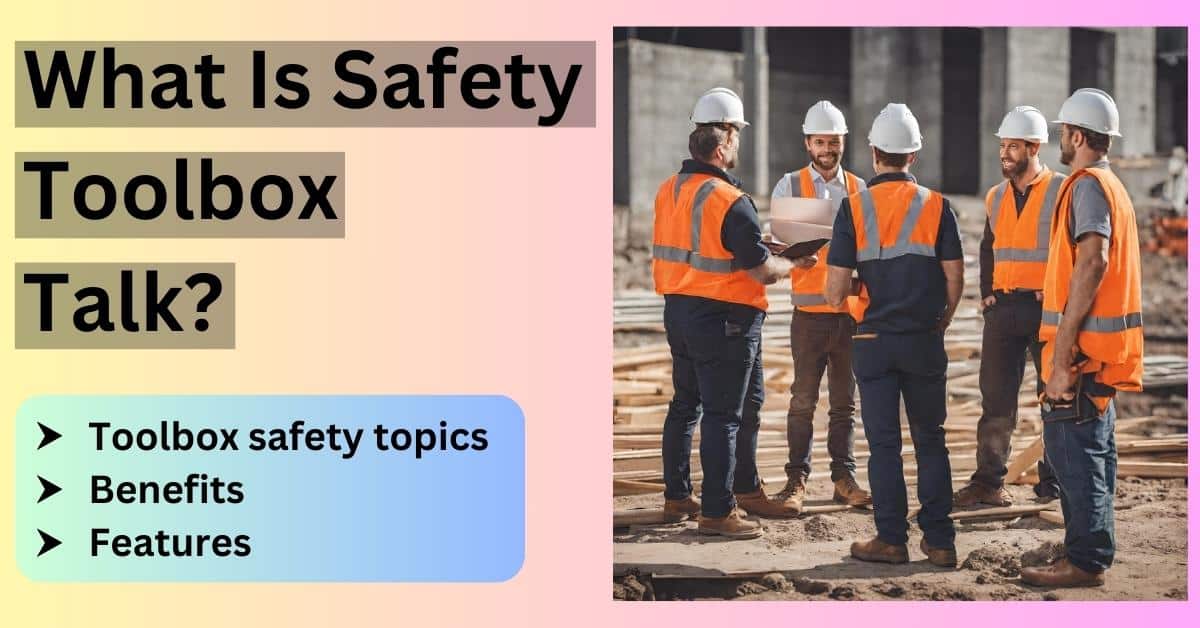
- Start with a real incident or near-miss – “Last week, a worker tripped over a coiled cable near the generator. Let’s talk why that happened.”
- Explain the hazard clearly – Use plain language, not jargon.
- Engage the team – Ask, “What would you do differently?” or “Have you seen this before?”
- Demonstrate or inspect – Show the right way, or inspect gear together.
- End with a commitment – “Today, we’ll all double-check our tool cords before leaving the site.”
Limit talks to 10–15 minutes. Longer sessions lose attention.
Common Mistakes to Avoid
Even experienced supervisors make these errors:
- Reading from a script – Workers tune out. Know the topic, don’t recite it.
- Ignoring worker input – The best insights come from those on the ground.
- No follow-up – Did the message stick? Check during site walks.
- One-size-fits-all topics – A talk for electricians shouldn’t mirror one for welders.
- Skipping documentation – Sign-in sheets and topic logs prove compliance during audits.
Pro tip: Assign rotating “safety spotlights” where crew members lead a topic monthly. Builds ownership.
Integrating Toolbox Talks Into Daily Workflow
The best safety cultures don’t schedule talks—they expect them.
- Link to the work plan – If drilling starts today, talk about dust, noise, and drill safety.
- Use visual aids – A photo of a damaged tool sparks more discussion than a verbal description.
- Time it right – Hold talks at the start of shift, before task initiation, not during lunch.
- Track topics – Use a simple spreadsheet to avoid repetition and ensure coverage.
Digital tools like safety apps can help schedule, deliver, and archive talks—especially on large sites.
5 Proven Toolbox Talk Resources and Tools
When you’re short on time, use these trusted options to stay consistent and compliant:
| Tool | Key Feature | Best For |
|---|---|---|
| SafetyTek | Pre-written, customizable topics with sign-in templates | General contractors |
| iAuditor by SafetyCulture | Mobile app with talk library and real-time reporting | Teams needing digital records |
| OSHA QuickCards | Free, printable one-page safety guides | Quick reference and handouts |
| Safety Meeting Pro | Industry-specific topics (construction, manufacturing) | Specialized crews |
| SafeSite Facts | Free weekly toolbox talk emails | Budget-conscious teams |
Many offer bilingual content—critical for diverse workforces.
Make Safety Part of the Culture, Not the Checklist
Toolbox talks shouldn’t be a compliance chore. When done right, they become a rhythm of the job site—moments where crews pause, connect, and protect each other.
The best topics aren’t pulled from a generic list. They’re pulled from yesterday’s close call, today’s task, or a worker’s honest concern.
Pick a topic that matters right now. Talk about it with clarity. Listen more than you speak. And follow up the next day.
That’s how safety becomes real. That’s how lives are protected.
FAQ
What should you look for in Top Toolbox Talk Topics for Safer, Smarter Workplaces? Focus on relevance, practical value, and how well the solution matches real user intent.
Is Top Toolbox Talk Topics for Safer, Smarter Workplaces suitable for beginners? That depends on the workflow, but a clear step-by-step approach usually makes it easier to start.
How do you compare options around Top Toolbox Talk Topics for Safer, Smarter Workplaces? Compare features, trust signals, limitations, pricing, and ease of implementation.
What mistakes should you avoid? Avoid generic choices, weak validation, and decisions based only on marketing claims.
What is the next best step? Shortlist the most relevant options, validate them quickly, and refine from real-world results.



